
Peek: Secret Compliment
Dyve StudiosSocial
4.5292.00 Reviews
- Version
- 2.5.1
- Installs
- 50.00K
- Age Rating
- Everyone
Screenshots
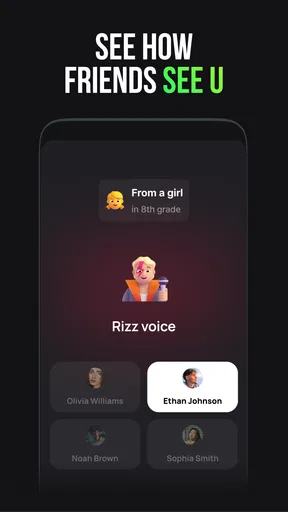
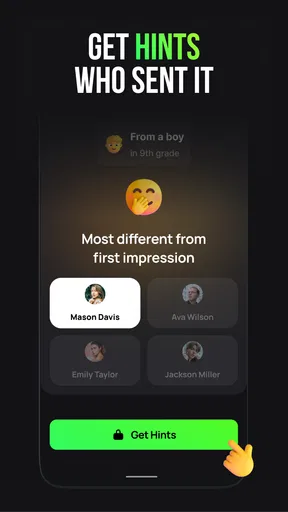
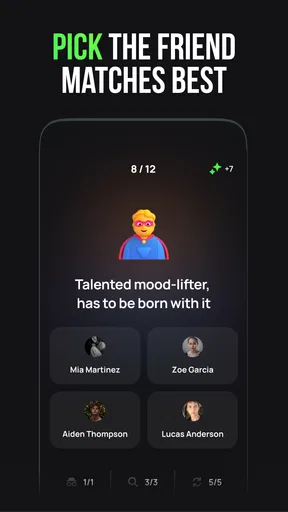
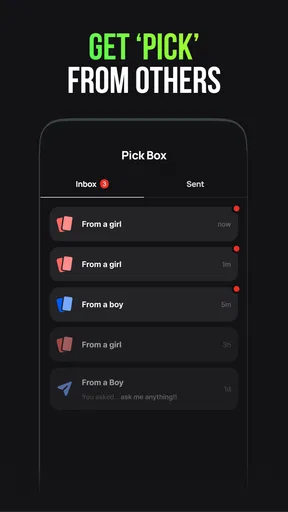

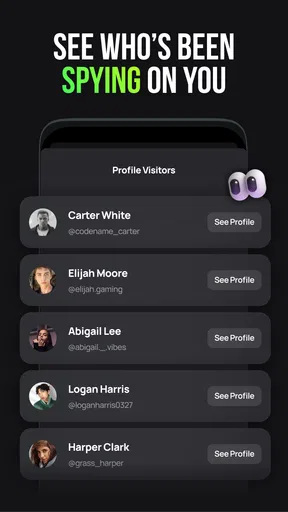

Our Review of Peek: Secret Compliment
 Analysis by Appyee
I tried Peek: Secret Compliment as a lightweight social app built around one appealing question: what do the people around me really think? Instead of asking friends directly and putting them on the spot, Peek uses anonymous polls to let them share opinions about me. That simple idea gives the app a playful place between a private conversation and a public social feed.
My first impression was that Peek is not trying to replace a full messaging platform. It is better understood as a small social layer for curiosity, jokes, and friendly interaction. The experience depends on having people you know willing to participate, so its value comes less from spending time inside the app and more from the reactions it creates outside it.
Dyve Studios released it on September 26, 2024, and the app is available free of charge for everyone. It has reached over 50 thousand installs and holds a 4.5 average from around 779 ratings, with roughly 292 written reviews. Those figures suggest that the concept has found an audience, although they do not change the central question I would ask before installing: will the people I want to hear from actually join in?
How Peek works in everyday social life
I use Peek’s anonymous polls as a prompt for friendly conversation, not as a verdict on what people think of me. That distinction matters in everyday life: a light question can make a quiet group chat more engaging, while a sensitive one can leave someone guessing about the meaning behind an answer. With that social context in mind, the next section looks at how the app’s current version fits into the experience.
A focused idea rather than another general-purpose network
The strongest thing about Peek is its narrow purpose. Many social apps ask users to post photos, maintain profiles, follow trends, or keep up with a constant stream of updates. Peek concentrates on anonymous polls about personal impressions. That focus makes it easier to understand quickly, especially if you are introducing it to a group of friends who do not want to learn another complicated platform.
The anonymous angle is also the reason the app can feel more interesting than simply asking, “What do you think of me?” A direct question usually produces polite answers, predictable teasing, or no answer at all. A poll can lower that social pressure. It gives friends a small prompt and lets them respond without attaching their name to the result.
That does not automatically make every answer honest or useful. Anonymous feedback can be kind, funny, awkward, or careless depending on the group. I would treat Peek as a way to start conversations, not as a reliable personality assessment. The most useful results are likely to come from questions that are specific enough to answer but light enough that nobody feels interrogated.
The best way to use it with friends
A realistic use case is a group of classmates, coworkers, or close friends sharing playful polls during a break. Someone might want to know which hobby best matches their personality, who in the group would plan a spontaneous trip, or what role others naturally associate with them. The point is not to collect a scientific result. The point is to create a reason for people to react.
I found that the quality of the experience depends heavily on how the poll is framed. A vague question can produce vague answers, while an overly personal one can make the anonymous format feel uncomfortable. I would avoid questions about appearance, money, relationships, family problems, or anything that could embarrass a particular person. The app may be rated for Everyone, but responsible use still depends on the user choosing suitable topics.
One practical workflow is to begin with a harmless question, wait for the group to understand the format, and only then try something more revealing. This gives people a chance to decide whether they enjoy anonymous feedback. It also prevents the first interaction from setting a hostile tone that is difficult to undo.
What anonymity changes
Anonymity can make participation easier, but it also removes accountability. That is the central trade-off in Peek. Someone who would never say a compliment aloud may feel comfortable sharing it through a poll. At the same time, someone may use the distance to send an answer they would not defend in person.
I would therefore avoid treating an anonymous result as evidence that a specific friend dislikes me or that the whole group agrees on something. A result can show a mood within the people who chose to participate, but it cannot explain why they answered that way. If a response feels hurtful, the healthiest reaction is to discuss the broader issue with trusted people rather than trying to identify the anonymous sender.
This is one of the app’s less obvious lessons: anonymous social tools work best when the group already has basic trust. In a supportive circle, anonymity can add playful mystery. In a tense group, it can amplify suspicion. Peek does not remove that social risk; it simply changes the way the risk appears.
Cost, free access, and paid value
Peek is free to download and use, which makes it easy to test with a group without asking everyone to pay first. That matters for an app whose usefulness depends on participation. If the first person had to make a purchase before friends could understand the idea, adoption would be much harder.
The app includes optional in-app purchases priced from $0.99 to $19.99 per item. I see the free access as the sensible starting point. Before considering any purchase, I would use the basic experience long enough to confirm that my friends actually respond and that the anonymous format feels comfortable in our group.
The paid side should be judged by whether it adds practical enjoyment for a regular user, not by the existence of a higher-priced item alone. A person who only wants occasional playful polls may find free access sufficient. Someone who uses Peek repeatedly with an active social circle may be more interested in optional extras, but the value depends on how often those extras are used and whether they improve interaction rather than simply adding more decoration.
Because the app’s core appeal is social, paying cannot solve the biggest limitation: an inactive audience. If nobody answers, an upgrade will not create genuine interest. I would spend only after seeing consistent participation, and I would keep expectations modest. The free version is the right way to discover whether Peek fits your group before attaching any monetary value to it.
Where the experience can become awkward
The first friction is the need to bring other people into the experience. Peek is not like a solo utility that becomes useful immediately after installation. It needs a social circle, and that circle needs to understand the point of anonymous polls. If your friends are already tired of invitations from new apps, getting meaningful participation may take more effort than the simple interface suggests.
The second issue is interpretation. A poll result can be entertaining, but it is easy to read too much into it. A low response count, a joke answer, or a question that only a few people understood can make the outcome misleading. I would look for patterns across several well-written polls instead of reacting strongly to one result.
There is also a difference between anonymity and emotional safety. Even if respondents are not identified, the person receiving the feedback still sees the result. That can be uncomfortable when the question touches on personal insecurities. I would not use Peek as a substitute for a serious conversation, conflict resolution, or mental-health support.
Another trade-off is that a focused app can feel limited once the novelty fades. If you want direct chats, long-form posts, video sharing, or a broad discovery feed, a conventional social network will offer more variety. Peek’s smaller scope is its advantage when you want one specific type of interaction, but it is also the reason it may not hold your attention every day.
Small habits that make polls more useful
I would keep questions concrete and give people a clear reason to answer. “What kind of weekend would suit me?” is easier to engage with than a broad request for an opinion. Questions with a few recognizable possibilities also reduce the chance that respondents will ignore the poll because they do not know how to phrase an answer.
A second useful habit is to separate playful curiosity from sensitive feedback. Use the app for social guessing games, compliments, and friendly comparisons. If you genuinely need to know whether you have hurt someone or caused a problem, ask directly in a private conversation. Anonymous polls are not a fair setting for resolving serious misunderstandings.
Third, I would share the experience with a group rather than relying on one person. A single friend may not provide enough activity to make the app feel alive. A class group, team, or established circle gives the format more chances to work, while still allowing people to participate at their own comfort level.
Finally, I would review the tone of the questions before sending them. A poll can look harmless to its creator but feel pointed to everyone else. If the wording seems designed to get one particular reaction from one particular person, I would rewrite it or skip it. That simple check protects the playful side of Peek.
Who is most likely to enjoy it
Peek is a good fit for people who enjoy low-pressure social games and want a new way to involve friends in conversation. It should appeal particularly to users who like discovering how they are perceived, as long as they can separate playful feedback from objective truth.
It also makes sense for an established group that wants a short activity rather than another full social platform. A group chat can handle direct discussion, but anonymous polls create a different kind of participation. People who normally stay quiet may be more willing to contribute when they do not have to attach their name to every answer.
The app may also suit someone who wants to test a social idea without paying upfront. Since access is free and the age rating is Everyone, it is easy to try with appropriate questions and decide whether the group responds well. The important word is “appropriate”: younger users should still involve trusted adults when a question becomes personal or uncomfortable.
Who should choose something else
I would skip Peek if you are looking for dependable, identifiable feedback. Anonymous responses are not the right tool when you need context, accountability, or a clear follow-up conversation. A direct message or face-to-face discussion is better for those situations.
I would also look elsewhere if your main goal is broad social discovery. Peek does not replace a messaging service, a photo-sharing network, or a community platform. Its appeal is the poll itself, so users who want constant content and many communication formats may find it too narrow.
People who are especially sensitive to uncertain feedback should approach it carefully. Even positive curiosity can become stressful when a result is unexpected and there is no way to ask the respondent what they meant. If you know that anonymous opinions tend to affect your mood, the app may be more trouble than fun.
Device support and the current release
The current version is 2.5.1, and it requires Android 8.0 or later. That makes the compatibility requirement worth checking before installation, particularly if you keep an older Android phone for secondary use. On a supported device, the main question is less about technical ambition and more about whether the social format matches your habits.
I would not install it expecting a large, constantly active network. The reported install base is meaningful for a newer social app, but your experience will still be shaped by your own contacts and the communities you invite. A smaller personal circle that participates can be more valuable than a much larger audience that never responds.
My verdict on the value
Peek succeeds because it turns a familiar social curiosity into a simple activity. I like that the idea is easy to explain, free to try, and flexible enough for friendly groups. The anonymous format can reveal compliments or opinions that people might not volunteer in a normal conversation, and that gives the app a distinct role among social tools.
My recommendation comes with boundaries. I would use it for light questions, group bonding, and occasional entertainment, while avoiding sensitive subjects and avoiding strong conclusions from individual results. I would also wait before buying anything, because the free experience needs to prove that your friends are active and that the format adds something to your conversations.
For the right group, Peek is a fun extra rather than an essential social app. It is worth trying if you already have friends who enjoy polls and playful self-discovery. If you need serious feedback, rich communication features, or a social network that works without inviting others, I would skip it and choose a more established alternative. The best value here comes from shared participation, not from using it alone or paying before you know your group will engage.
Verdict
Strengths of Peek: Secret Compliment
- Simple interface makes sending anonymous compliments quick and easy.
- Positive messages can help brighten someone’s day and encourage kindness.
- Works well for casual interactions among friends, classmates, or coworkers.
- Short compliment format keeps the experience lightweight and easy to understand.
- Discovering kind feedback can create fun conversations within a group.
Limitations of Peek: Secret Compliment
- Anonymous messages may still cause discomfort or invite unwanted attention.
- Limited context can make some compliments feel vague or impersonal.
- The app’s value depends heavily on having an active user community.
- Users may receive repetitive, low-effort, or insincere compliments.
- Privacy expectations should be checked carefully before sharing personal details.
Similar Picks in This Category
View All
Meta Platforms, Inc.4.6

Instagram4.0

Likee-Live, Chat & Party Games
Likeme Pte. Ltd.4.4

Facebook Lite
Meta Platforms, Inc.4.5

TikTok - Videos, Shop & LIVE
TikTok Pte. Ltd.4.0

Moj: Free Short Drama & Reels
ShareChat4.1
Frequently Asked Questions
What is Peek: Secret Compliment and how does it work?
Peek: Secret Compliment is a social app focused on sending and receiving anonymous compliments. After creating a profile and connecting with people you know, you can share positive messages without immediately revealing your identity. The app is designed around curiosity and friendly interaction, although the exact features and available options may vary depending on your device, region, account settings, and the current version of the application.
Are compliments on Peek completely anonymous?
Peek is built around anonymous compliments, but users should not assume that every message is permanently or technically untraceable. The app may collect account, device, usage, and moderation information, and certain hints or paid features could potentially reveal limited details about the sender. Before posting anything personal, review the app’s privacy policy and remember that anonymity does not remove responsibility for respectful behavior or protect inappropriate messages from moderation.
Is Peek: Secret Compliment safe for teenagers and younger users?
Safety depends on the platform’s age requirements, privacy controls, and how carefully the app is used. Anonymous messaging can be entertaining, but it may also lead to unwanted contact, teasing, spam, or hurtful comments. Parents and younger users should check the listed age rating, avoid sharing personal information, use blocking and reporting tools when available, and discuss what to do if a message feels threatening, uncomfortable, or inappropriate.
Does Peek: Secret Compliment cost money or include in-app purchases?
The app may be free to download while offering optional in-app purchases, subscriptions, or paid features connected with additional hints, visibility, customization, or interaction tools. Pricing and available purchases can change by country and operating system. Before confirming a payment, check the store listing and purchase screen carefully, especially if the app is being used by a child, and review your Apple App Store or Google Play purchase settings.
What should I do if I receive an offensive or unwanted compliment?
Do not respond with personal information or continue a conversation that makes you uncomfortable. Save evidence such as screenshots if necessary, then use Peek’s available reporting, blocking, or moderation options. If the message includes threats, harassment, sexual content, or attempts to obtain private details, tell a trusted adult or contact the appropriate authorities. Keeping your profile information limited can also reduce unwanted attention while using anonymous social apps.
